Darkness changes a trail without moving a single rock. The route may be the same one you walked in daylight, but once the sun is gone the world contracts. The horizon disappears. Distance becomes harder to judge. Your attention narrows to the circle of light in front of you.
I like that honesty. At night, there is less room for careless movement. You listen differently. You check your footing. You become aware of sounds that daylight usually buries. A headlamp is a small piece of equipment, but out there it becomes the boundary between what you can see and what you have to trust.
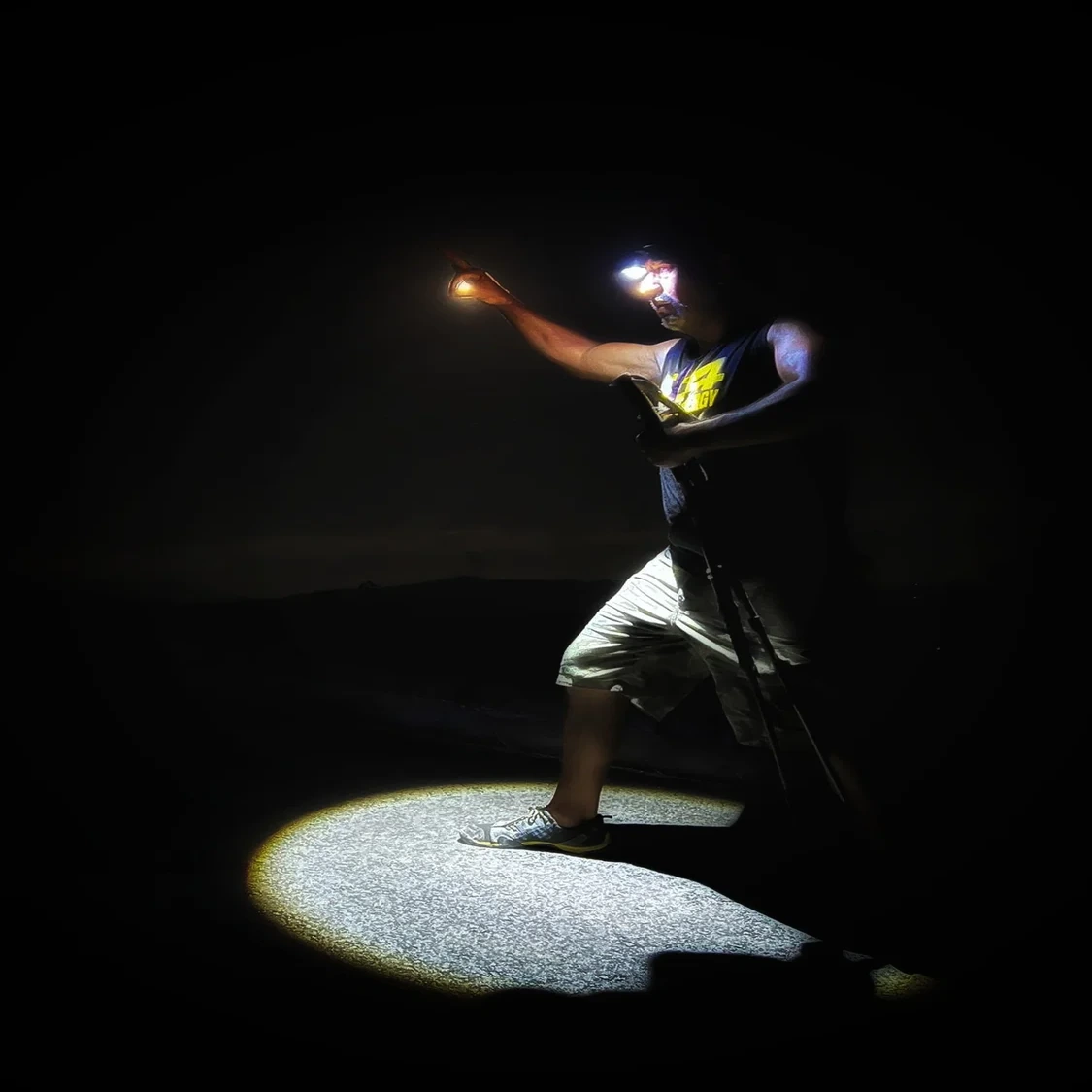
This photograph catches that transition. The light is doing its job, but the darkness is still larger. That balance reminds me why preparation matters long before it becomes dramatic. Batteries, layers, water, route knowledge, and enough patience to slow down are not accessories. They are what keep a normal evening from becoming a bad decision.
And yet night miles are not only serious. There is something deeply alive about moving through a landscape after most people have gone home. The trail feels private. The air changes. Familiar ground becomes mysterious again. You can feel tired and grateful at the same time.
The mountain does not become more dangerous because it is dark. It simply becomes less forgiving of distraction. That distinction matters.
After sunset, I am reminded that courage is not charging blindly into what I cannot see. It is carrying enough light, judgment, and humility to keep taking the next good step until the way home becomes visible again.